Pick a topic
Choose the chord, scale, or triad you want to learn.
GUITARRY
Live overlays directly on your guitar.
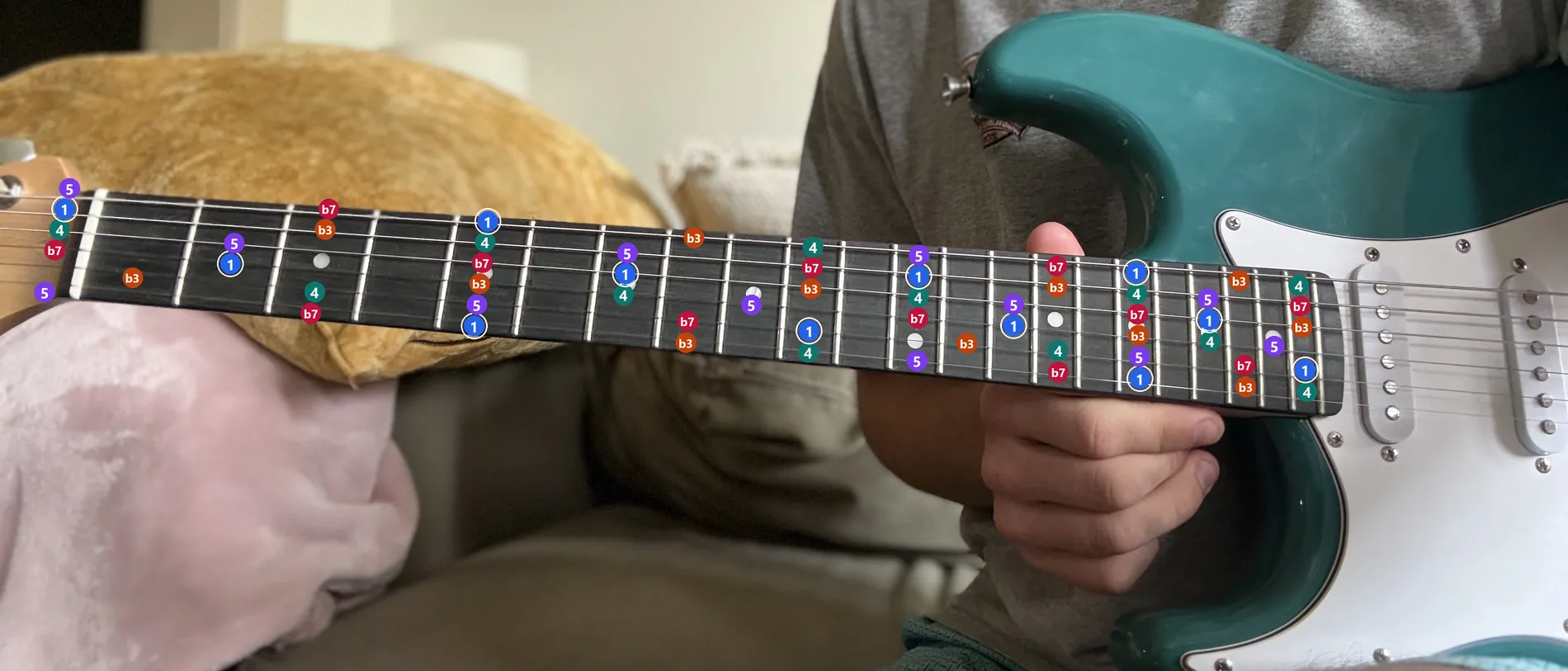
Guitarry overlays live chords, scales, triads, and much more right onto your fretboard for you to see.
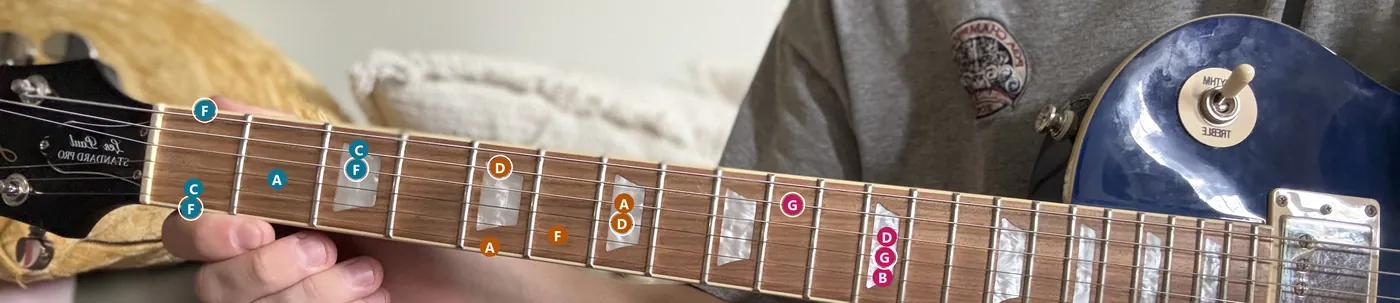 F majorD minorG major
 E majorC majorA minor
 A minor pentatonic
All you need is a laptop and your guitar.
Choose the chord, scale, or triad you want to learn.
Prop your guitar so the whole fretboard is in the camera.
The overlay draws on your strings. Play along, live, on your own guitar.
$19.99$9.99per month
$159.99$79.99per year
What people ask before they download.
Yes — Guitarry is a Windows desktop app, not a browser tab. It reads your camera and draws the overlay on your own machine, which is what keeps the neck tracking in step with the picture instead of a round trip to a server.
A Windows PC, an ordinary webcam or laptop camera, and somewhere to prop your guitar so the whole neck is in frame. No pedal, no interface, no clip-on hardware on the headstock.
No — that is the point. Pick a chord, scale, triad, or key and Guitarry puts it on the strings in front of you. You learn the shape by playing it on your own neck, not by memorising a diagram first.
Both. A beginner gets the fretboard demystified — where a shape actually lives, in the position they are already in. A player who knows their scales gets a much faster way to see a key across the whole neck and find ideas outside their usual box.
Tabs and videos make you look away from the guitar and translate. Guitarry puts the information on the instrument you are already holding, at the size and angle you are already seeing it, so your eyes stay on your hands.
Any standard six-string, acoustic or electric — including a beat-up practice guitar. Guitarry knows the difference and draws the electric's full 22 frets or the acoustic's playable range. Bass, ukulele, and 7+ strings are not supported yet.
No. Guitarry has a string flip and a mirrored camera view, and it remembers the setting, so a left-handed neck is set up once and then stays that way.
Not yet. Guitarry is a Windows desktop app today, and mobile is planned — the camera tracking and the overlay have to be right on desktop first.
Nowhere. Frames are processed on your computer to find the fretboard and are never uploaded or kept, there is no Guitarry account to sign into, and your tabs and practice work stay in a folder on your machine. The specifics are in the privacy policy.
Yes. Subscriptions renew automatically until you cancel, and cancelling just stops the next renewal — Pro stays active for the time you already paid for. Billing is handled by Lemon Squeezy, and the link to manage or cancel is in every receipt email.
The app moves to the free tier: the reference library and tuner keep working, and everything you saved stays on your machine. Subscribing unlocks the building tools again — and if you subscribe within 3 days of downloading, you pay half price for as long as you keep Pro.
Email hello@guitarry.com with any other questions you may have.